

What Is a Kickboxing Comeback Fight? Strategy Guide

A kickboxing comeback fight is an informal description for a return after a meaningful absence, injury, retirement or difficult career period. No universal rule defines the required layoff, and a database should not label a bout a comeback solely from a marketing narrative. Matchmaking, medical clearance, recent activity and the fighter's documented results provide the useful context.
What Strategically Defines a Kickboxing Comeback Fight?
Promotions and media use the term differently. A six-month absence may be routine for one athlete and meaningful for another, while KickboxHub's first time-based display adjustment begins after 12 months. Treat these as separate concepts. Useful signals include:
- Extended absence: State the actual dates. KickboxHub applies a 20% display adjustment from 12 months, but that ranking rule does not define the word “comeback.”
- Injury recovery: Structural injuries, concussions, and torn ligaments require medically supervised clearance before any return is sanctioned.
- Loss streak reset: A fighter absorbing two or three consecutive losses may step back, recalibrate, and return in a lower-stakes matchup to rebuild confidence and technical sharpness.
- Discipline or weight class shift: Some fighters use the comeback as a strategic pivot to a new weight class or rule set, exploiting physical advantages that were suppressed in their previous division.
Kickboxing's rule set, which removes extended clinch work and elbows, also makes it a preferred vehicle for tactical comeback warm-ups. Fighters transitioning from MMA or Muay Thai often use kickboxing bouts to rebuild timing and endurance in a technically controlled environment before returning to more complex combat systems.

Pro Tip: If you are tracking a fighter's comeback trajectory on our global kickboxing events schedule, check whether their return bout is scheduled for three rounds rather than five. Promoters frequently use shorter formats to reduce physical risk on a fighter whose gas tank and ring timing are unproven after a long layoff.
How Do Psychological Factors Shape Comeback Fight Readiness?
The mental weight of a comeback fight is often heavier than the physical preparation. A fighter who has been absent for a year or more carries a specific psychological load: public skepticism, internal doubt, and the pressure of performing against an opponent who has been actively logging ring time.
The psychological challenges a returning fighter must address include:
- Managing public narrative: Fans and media frame comebacks as either triumphant or desperate. A fighter who internalizes that framing fights with noise in their head.
- Resetting emotional reactivity: Fighters who have been away often overcorrect, either fighting too cautiously or overcommitting to prove they still have power.
- Age-related adaptation: Fighters over 35 face a compounded psychological challenge. Physical recovery is slower, and the internal voice questioning whether the body can still perform gets louder.
Some elite fighters reject the word "comeback" entirely, framing their return as normal career continuity rather than a dramatic resurrection to reduce the pressure to perform at a mythologized level. A fighter who believes they never left fights with far more composure than one who feels they must prove something to the world.
What Matchmaking Mechanics Do Promoters Use for Comeback Fights?
Promoters treat comeback fight matchmaking as a narrative construction project. The opponent is not just a body in the opposite corner; they are a plot device selected to test specific metrics.
The four dominant matchmaking archetypes for comeback fights are:
- The Confidence Builder: An opponent who is ranked lower, stylistically favorable, and unlikely to expose the returning fighter's ring rust. This matchup prioritizes a clean win over competitive drama.
- The Spoiler: A lower-ranked but dangerous opponent with a specific skill set that tests the returning fighter's weaknesses.
- The Style Clash: An opponent whose fighting style creates a technically interesting matchup regardless of ranking, producing a fight that feels meaningful to the fans.
- The Credibility Opponent: A mid-to-high ranked fighter with a dangerous record. Beating this opponent instantly validates the returning fighter's standing.
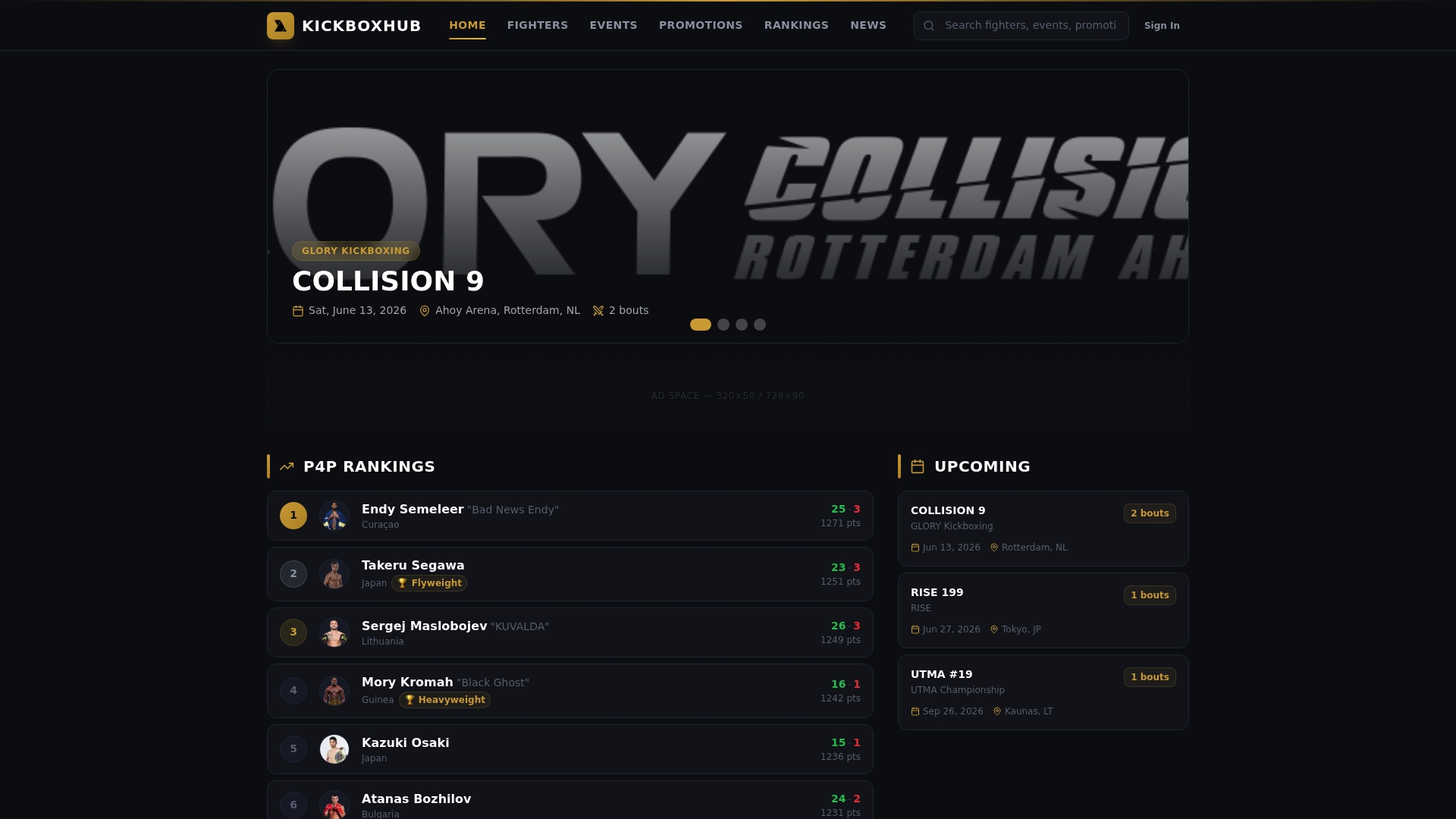
Real-World Example: Look at Antonio Plazibat's massive return at GLORY Collision 9. Plazibat bypassed a soft tune-up fight and took on Anis Bouzid—the 2025 Breakout Fighter of the Year. Plazibat engaged in a grueling war that pushed into a sudden-victory extra round before securing a viral knockout. That is the ultimate "Credibility Opponent" matchmaking play.
Pro Tip: When evaluating a comeback matchup, look at the opponent's loss methods, not just their record. A fighter with eight losses, all by knockout, is a very different matchmaking choice than one with eight losses, all by decision.
How does KickboxHub handle inactivity and a return?
KickboxHub separates the stored Elo rating from the score displayed in active rankings. The stored rating changes only when a completed bout is processed. The display applies the higher of two adjustments:
| Situation | Current display adjustment |
|---|---|
| 12–23 months since the last documented bout | 20% |
| 24–35 months | 50% |
| 36 months or more | 100% |
| One documented bout in the last two years | 25% |
| Two documented bouts in the last two years | 10% |
Zero recent bouts produces a 40% frequency adjustment, although the time-based adjustment may be higher. Active newcomers with fewer than three career bouts receive a frequency grace period if they fought within the last 12 months. The adjustments do not stack; the higher one is used.
For the first documented result after more than 24 months away, the Elo calculation uses a K-factor of 60. That means the rating is more responsive in either direction, but it does not guarantee a 40- or 50-point change. The actual movement still depends on the two ratings, expected outcome, result method and title status.
Read the live methodology for the current formula and the rankings guide for a plain-language explanation.
What Practical Strategies Optimize a Kickboxing Comeback?
Preparation for a comeback fight is fundamentally different from a standard training camp. The physical and tactical demands require precise scaling.
- Graduated return protocols: Medical guidelines require strict non-contact periods after concussions. Rushing this timeline is the fastest way to end a career permanently.
- Incremental fight experience: Accepting a three-round bout before jumping back into five-round championship waters allows a fighter to test their gas tank and ring IQ safely.
- Weight class reconsideration: Fighters who have been away for a year often return at a different weight. Forcing a cut to a weight that no longer suits the fighter's natural frame adds unnecessary stress to an already demanding return.
- Psychological preparation: A qualified coach or clinician can help an athlete manage confidence, pressure and return-to-competition concerns.
Safety note: Training volume, sparring intensity and medical clearance must be individualized by qualified coaches and healthcare professionals.
Key Takeaways
A kickboxing comeback fight is a high-stakes, algorithmically volatile event that demands precise matchmaking and medically sound preparation.
| Concept | The Reality |
|---|---|
| Matchmaking Drives Narrative | Promoters choose opponents to tell a specific story, whether confidence building, spoiler testing, or credibility signaling. |
| Ranking Decay is Real | KickboxHub applies a -20% display penalty after 12 months of inactivity, with a Ring Rust K-factor of 60 amplifying the result's volatility. |
| Psychology is the Hidden Variable | Shifting from emotional brawling to patient, IQ-driven fighting is the most consistent marker of a successful comeback. |
| Preparation Must be Graduated | Incremental fight experience and age-adjusted nutrition are non-negotiable for a safe and effective return to the ring. |
Why comeback fights require careful interpretation
A return bout combines sport, health and matchmaking questions that a headline cannot answer. Check the length and reason for the absence, the opponent's current level, the contracted rules and weight, and whether the fighter has been medically cleared. Ranking movement describes recorded competitive evidence; it should never be treated as medical readiness or a promoter's matchmaking instruction.
Track Every Comeback Fight on KickboxHub
KickboxHub is the ultimate programmatic database for the striking arts. When a fighter announces a return, the rankings show the stored and activity-adjusted rating derived from the bouts currently documented. Fighter profiles and event pages provide the underlying results.
Explore the full historical kickboxing promotions database to track upcoming comeback bouts and see which returning fighters are scheduled against which opponent archetypes. Check the verified kickboxing fighters list to see exactly how inactivity penalties have suppressed specific fighters' scores before their returns. KickboxHub gives you the analytical layer that turns a comeback fight from a feel-good story into a fully understood competitive matrix.
FAQ
What is a kickboxing comeback fight?
A kickboxing comeback fight is a competitive return to the ring after a significant absence, injury, or loss streak, designed to rebuild a fighter's rank equity, momentum, and fan confidence.
How long of a layoff triggers a ranking penalty?
KickboxHub currently applies a 20% display adjustment from 12 months and 50% from 24 months. Recent fight frequency can also affect the displayed score; the higher applicable adjustment is used.
Why do promoters choose specific opponents for comeback fights?
Promoters select opponents to control the narrative, using confidence builders, spoilers, or credibility opponents depending on the specific ranking data they want the comeback fight to generate.
How do algorithms react to comeback fights?
KickboxHub uses a K-factor of 60 when the previous documented bout was more than 24 months earlier. The point change is not fixed; it depends on expected outcome and the other published modifiers.
Recommended
Returns and active rankings
Continue exploring
Mentioned Fighters


Related Organizations
 GLORY Kickboxing
Comments (0)
Sign in to leave a comment.
No comments yet. Be the first!