

What Is a Kickboxing Comeback Fight? Strategy Guide

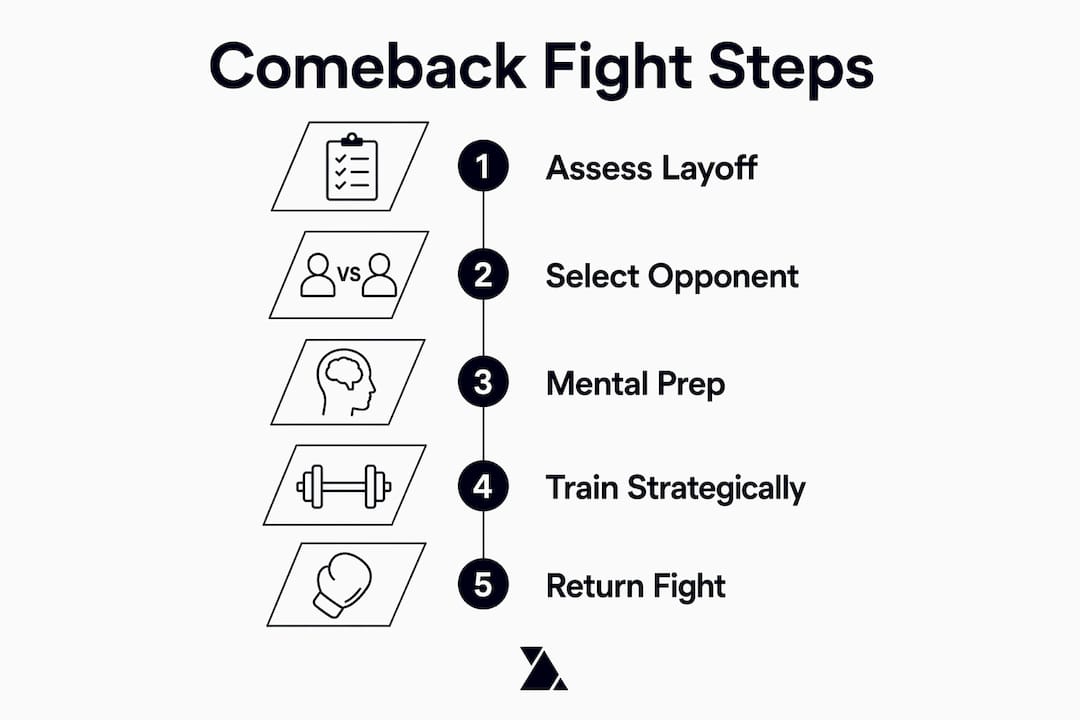
A kickboxing comeback fight is defined as a competitive return to the ring following a significant absence, loss streak, or severe injury, with the explicit goal of rebuilding momentum, rank equity, and fan confidence. This is not simply a fighter showing up after time off. It is a highly calculated event, shaped by matchmaking decisions, psychological preparation, and algorithm mechanics that punish inactivity and reward explosive returns.
Understanding what a kickboxing comeback fight is means understanding the full architectural graph behind it: who the opponent is, why that opponent was chosen, what the fighter's mental state looks like, and exactly what our ranking algorithm does the moment the official result hits the database.
What Strategically Defines a Kickboxing Comeback Fight?
A comeback fight earns that classification when at least one of three conditions is present: a layoff of six months or longer, recovery from a significant injury, or a return after a damaging loss streak. The fight is never random. Every element, from the venue to the opponent's validated record, is selected to give the returning fighter the best possible chance of a confidence-building performance without handing them a "gift win" that damages their credibility.
The criteria that separate a comeback fight from a regular bout include:
- Extended absence: Six months is the informal threshold; twelve months or more triggers formal ranking display penalties on platforms like KickboxHub.
- Injury recovery: Structural injuries, concussions, and torn ligaments require medically supervised clearance before any return is sanctioned.
- Loss streak reset: A fighter absorbing two or three consecutive losses may step back, recalibrate, and return in a lower-stakes matchup to rebuild confidence and technical sharpness.
- Discipline or weight class shift: Some fighters use the comeback as a strategic pivot to a new weight class or rule set, exploiting physical advantages that were suppressed in their previous division.
Kickboxing's rule set, which removes extended clinch work and elbows, also makes it a preferred vehicle for tactical comeback warm-ups. Fighters transitioning from MMA or Muay Thai often use kickboxing bouts to rebuild timing and endurance in a technically controlled environment before returning to more complex combat systems.

Pro Tip: If you are tracking a fighter's comeback trajectory on our global kickboxing events schedule, check whether their return bout is scheduled for three rounds rather than five. Promoters frequently use shorter formats to reduce physical risk on a fighter whose gas tank and ring timing are unproven after a long layoff.
How Do Psychological Factors Shape Comeback Fight Readiness?
The mental weight of a comeback fight is often heavier than the physical preparation. A fighter who has been absent for a year or more carries a specific psychological load: public skepticism, internal doubt, and the pressure of performing against an opponent who has been actively logging ring time.
The psychological challenges a returning fighter must address include:
- Managing public narrative: Fans and media frame comebacks as either triumphant or desperate. A fighter who internalizes that framing fights with noise in their head.
- Resetting emotional reactivity: Fighters who have been away often overcorrect, either fighting too cautiously or overcommitting to prove they still have power.
- Age-related adaptation: Fighters over 35 face a compounded psychological challenge. Physical recovery is slower, and the internal voice questioning whether the body can still perform gets louder.
Some elite fighters reject the word "comeback" entirely, framing their return as normal career continuity rather than a dramatic resurrection to reduce the pressure to perform at a mythologized level. A fighter who believes they never left fights with far more composure than one who feels they must prove something to the world.
What Matchmaking Mechanics Do Promoters Use for Comeback Fights?
Promoters treat comeback fight matchmaking as a narrative construction project. The opponent is not just a body in the opposite corner; they are a plot device selected to test specific metrics.
The four dominant matchmaking archetypes for comeback fights are:
- The Confidence Builder: An opponent who is ranked lower, stylistically favorable, and unlikely to expose the returning fighter's ring rust. This matchup prioritizes a clean win over competitive drama.
- The Spoiler: A lower-ranked but dangerous opponent with a specific skill set that tests the returning fighter's weaknesses.
- The Style Clash: An opponent whose fighting style creates a technically interesting matchup regardless of ranking, producing a fight that feels meaningful to the fans.
- The Credibility Opponent: A mid-to-high ranked fighter with a dangerous record. Beating this opponent instantly validates the returning fighter's standing.
Real-World Example: Look at Antonio Plazibat's massive return at GLORY Collision 9. Plazibat bypassed a soft tune-up fight and took on Anis Bouzid—the 2025 Breakout Fighter of the Year. Plazibat engaged in a grueling war that pushed into a sudden-victory extra round before securing a viral knockout. That is the ultimate "Credibility Opponent" matchmaking play.
Pro Tip: When evaluating a comeback matchup, look at the opponent's loss methods, not just their record. A fighter with eight losses, all by knockout, is a very different matchmaking choice than one with eight losses, all by decision.
How Do KickboxHub Algorithms React to Comeback Fights?
This is where the mechanics get genuinely complex, and where our programmatic database adds real analytical value. Ranking systems do not simply pause when a fighter goes inactive. They actively penalize absence and amplify algorithmic volatility when the fighter finally returns.
KickboxHub's ranking decay system operates on two key mechanisms:
| Mechanism | Trigger | Algorithmic Effect |
|---|---|---|
| Inactivity Display Penalty | 12–24 month layoff | Automatic -20% reduction in displayed ranking score |
| Ring Rust K-Factor | Return fight after extended absence | High-volatility K-factor of 60 applied to result |
| Standard K-Factor | Active fighters in regular competition | Lower volatility; standard ranking shifts per result |
| Momentum Rebuild | Consecutive wins post-return | Gradual K-factor normalization back to standard limits |
The -20% display penalty is a public signal. It tells fans, promoters, and opponents that this fighter's ranking reflects mathematical uncertainty.
The Ring Rust K-factor of 60 is the more dramatic mechanism. A standard fight might shift a fighter's ranking by 10–15 points. A comeback fight with a K-factor of 60 can produce a massive surge of 40–50 points in either direction. Win the comeback fight, and you rocket back up the leaderboard. Lose it, and the drop is catastrophic.
You can see this volatility reflected directly on the kickboxing rankings leaderboard. Checking the Luis Tavares kickboxing record or Bahram Rajabzadeh's stat profile illustrates how periods of inactivity visually alter a fighter's standing relative to active competitors.
What Practical Strategies Optimize a Kickboxing Comeback?
Preparation for a comeback fight is fundamentally different from a standard training camp. The physical and tactical demands require precise scaling.
- Graduated return protocols: Medical guidelines require strict non-contact periods after concussions. Rushing this timeline is the fastest way to end a career permanently.
- Incremental fight experience: Accepting a three-round bout before jumping back into five-round championship waters allows a fighter to test their gas tank and ring IQ safely.
- Weight class reconsideration: Fighters who have been away for a year often return at a different weight. Forcing a cut to a weight that no longer suits the fighter's natural frame adds unnecessary stress to an already demanding return.
- Mental coaching integration: Fight IQ work, visualization, and pressure-testing in sparring are non-negotiable. They are the difference between a fighter who looks sharp and one who looks like they have been away.
Pro Tip: Track sparring rounds. If a returning fighter is not consistently hitting eight to ten rounds of live, high-pressure sparring per week by week four of their camp, their timing will be exposed on fight night.
Key Takeaways
A kickboxing comeback fight is a high-stakes, algorithmically volatile event that demands precise matchmaking and medically sound preparation.
| Concept | The Reality |
|---|---|
| Matchmaking Drives Narrative | Promoters choose opponents to tell a specific story, whether confidence building, spoiler testing, or credibility signaling. |
| Ranking Decay is Real | KickboxHub applies a -20% display penalty after 12 months of inactivity, with a Ring Rust K-factor of 60 amplifying the result's volatility. |
| Psychology is the Hidden Variable | Shifting from emotional brawling to patient, IQ-driven fighting is the most consistent marker of a successful comeback. |
| Preparation Must be Graduated | Incremental fight experience and age-adjusted nutrition are non-negotiable for a safe and effective return to the ring. |
Why Comeback Fights Deserve More Analytical Respect
I have tracked hundreds of comeback fights across the global striking ecosystem, and the one thing that consistently surprises casual fans is how much engineering goes into what looks like a simple return bout. The drama on the surface—the walkout, the crowd noise, the emotional post-fight interview—obscures the months of calculated matchmaking that produced that exact moment.
The fighters who handle comebacks best are almost never the ones who treat the return as a Hollywood redemption arc. They are the ones who treat it as a technical problem. What weight class gives me the best structural advantage? What opponent tests my weaknesses without exposing me to catastrophic risk? What does my KickboxHub Elo score look like after the inactivity penalty, and what result method do I need to recover it?
A fighter sitting at a -20% penalized score waiting on their return is not just fighting for pride. They are fighting for a leaderboard position that could determine whether they secure a title eliminator or spend another year in mid-card purgatory. That is real pressure.
The future of comeback matchmaking will increasingly be data-driven. Promoters who understand ranking volatility mechanics will use them to engineer maximum spectator interest, and fans who understand those mechanics will watch these fights with a completely different level of appreciation.
— Lukas
Track Every Comeback Fight on KickboxHub
KickboxHub is the ultimate programmatic database for the striking arts. When a fighter announces a return, our network instantly processes the data you need to understand what it means: their pre-absence ranking, the inactivity penalty applied, and the K-factor volatility their comeback result will generate.
Explore the full historical kickboxing promotions database to track upcoming comeback bouts and see which returning fighters are scheduled against which opponent archetypes. Check the verified kickboxing fighters list to see exactly how inactivity penalties have suppressed specific fighters' scores before their returns. KickboxHub gives you the analytical layer that turns a comeback fight from a feel-good story into a fully understood competitive matrix.
FAQ
What is a kickboxing comeback fight?
A kickboxing comeback fight is a competitive return to the ring after a significant absence, injury, or loss streak, designed to rebuild a fighter's rank equity, momentum, and fan confidence.
How long of a layoff triggers a ranking penalty?
KickboxHub applies a -20% display penalty to fighters who have been inactive for 12–24 months, signaling mathematical uncertainty to promoters and fans.
Why do promoters choose specific opponents for comeback fights?
Promoters select opponents to control the narrative, using confidence builders, spoilers, or credibility opponents depending on the specific ranking data they want the comeback fight to generate.
How do algorithms react to comeback fights?
KickboxHub applies a high-volatility "Ring Rust K-factor" of 60 to a returning fighter's first bout, meaning their ranking will experience massive swings (40-50 points) based on a single win or loss.
Recommended

Comments (0)
Sign in to leave a comment.
No comments yet. Be the first!