

How to Find Kickboxing Fight Results History
 Lukas
LukasKickboxing fight results history is defined as the documented record of professional and amateur bout outcomes, organized by fighter, event, and sanctioning body across official archives and promotion databases. Finding that history accurately requires knowing which organizations maintain authoritative records and how their data structures differ. Sources like the WKO Fight-Rec system, WAKO's official event listings, ONE Championship's event archives, and X-1 Events' chronological results pages each cover distinct slices of the sport. Miss one layer, and your research has blind spots the size of a Grand Prix bracket.
How to find kickboxing fight results history using official records
The most reliable entry point for any historical kickboxing research is the official sanctioning body. These organizations maintain structured, verified records that third-party sites simply cannot replicate with the same authority.
The WKO Fight-Rec system covers bouts from 2018 to the present, drawing exclusively from WKO Open Championships. Records are updated following every championship event and include wins, losses, and win ratios across the full back catalog. That scope is both a strength and a constraint. The data is clean and verified, but it captures only WKO-sanctioned competition. A fighter who competed heavily on the European circuit under different bodies will appear incomplete in this system alone.

WAKO, the World Association of Kickboxing Organizations, maintains an official event list that indexes sanctioned competitions chronologically. This functions as a master index rather than a granular fight-by-fight database. You use it to confirm that an event was legitimately sanctioned, then cross-reference the specific bout results through promotion records or local federation archives. Think of it as the spine of the record, not the full skeleton.
Anchoring historical research on official sanctioning bodies reduces data gaps and improves credibility compared to third-party reconstructed records. That credibility matters when you are building a fighter profile or analyzing career win rates across eras.
Key practices when using official organization records:
- Note the exact competition scope for every record you pull. WKO Fight-Rec covers WKO Open Championships only, not regional or unsanctioned events.
- Use WAKO's event index to verify event legitimacy before building a dataset from promotion-level results.
- Cross-check fighter names against multiple spellings. Transliteration inconsistencies between Japanese, Russian, and Arabic names create phantom duplicates in historical datasets.
- Record the sanctioning body alongside every fight entry so your dataset remains filterable by organizational scope.
Pro Tip: Always tag each record with its organizational scope at the point of entry. Mixing WKO-only data with WAKO-sanctioned results without labeling them creates a dataset that looks complete but contains structural inconsistencies you will not catch until the analysis phase.
How do promotion archives help you track historical kickboxing bouts?
Official sanctioning bodies provide the framework. Promotions fill in the detail. For anyone researching professional kickboxing outcomes at the elite level, promotion-specific archives are where the granular fight data lives.
ONE Championship publishes full bout results for every kickboxing event it runs. The ONE Fight Night 43 results page is a precise example: it documents individual bout outcomes, methods of victory, and round details for every fight on the card. That level of specificity is what separates promotion archives from sanctioning body indexes. You can trace not just who won, but how the fight ended and in what context.
ONE Championship also publishes dedicated title lineage pages. The ONE Bantamweight Kickboxing World Title history traces every championship change since 2019, naming each titleholder, the opponent they defeated, and the event where the title changed hands. This is a fundamentally different research tool than an event results page. Title lineage pages answer the question of belt ownership over time; event results pages answer the question of what happened in a specific fight on a specific night.
X-1 Events operates a chronological results archive that lists full fight outcomes by event, including decisions, TKOs, and stoppages with timing data. For analysts studying regional American kickboxing, X-1's archive is one of the most organized independent promotion records available. The categorized structure makes it possible to build a complete fight card history without reconstructing results from secondary sources.
Promotion archives serve different analytical needs than full fight databases:
- Event results pages are best for bout-level research: method, round, and opponent context.
- Title lineage pages are best for championship succession research and belt history.
- Chronological archives like X-1's allow full fight card reconstruction across multiple years.
- Promotion archives are self-published, so they reflect the promotion's own record-keeping standards. Verify against sanctioning body data when accuracy is critical.
Pro Tip: Combine title lineage trackers with event archives for thorough research. A title lineage page tells you the champion changed; the corresponding event results page tells you exactly how the fight unfolded. Used together, they give you the full picture.
What is the step-by-step process for finding and verifying fight histories?
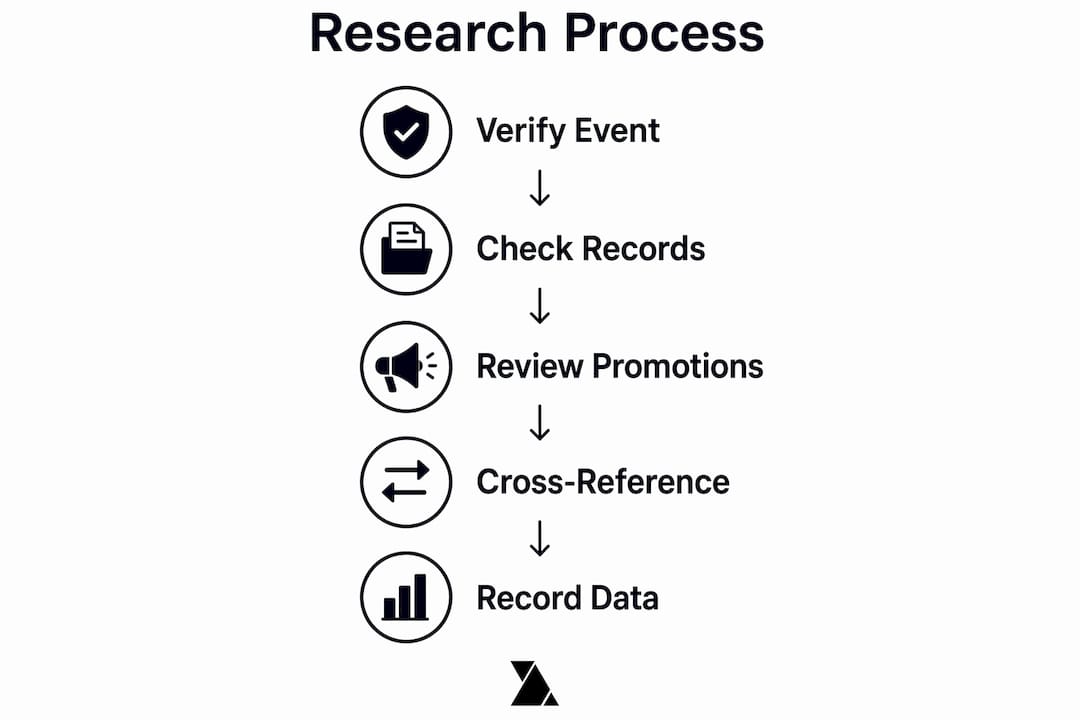
Systematic research produces reliable results. Ad hoc searching through Google produces noise. Here is the workflow that separates analysts who build accurate historical datasets from those who spend hours chasing contradictory information.
- Identify the sanctioning body. Start with the organization that sanctioned the fight. For WKO-sanctioned bouts, go directly to the WKO Fight-Rec system. For WAKO-sanctioned events, start with the WAKO event list to confirm the event exists in the official record.
- Locate the promotion archive. Once you have confirmed the sanctioning context, find the promotion that ran the event. ONE Championship, X-1 Events, and similar organizations maintain their own results pages that contain bout-level detail the sanctioning body record may not include.
- Pull the fighter record. Search for the individual fighter across both the sanctioning body database and the promotion archive. Compare the two records for consistency. Discrepancies in win/loss counts often signal that one source covers a narrower scope.
- Cross-reference the title lineage if applicable. If the fight involved a title, check the promotion's championship history page. Title lineage and event result pages should be used together to separate championship timeline research from detailed bout-level investigation.
- Record metadata for every entry. Log the fight date, method of victory, event name, sanctioning body, and source URL. This metadata is what makes a dataset verifiable and reusable.
| Research step | Primary source | Secondary source |
|---|---|---|
| Confirm event legitimacy | WAKO event list | Promotion press release |
| Pull bout-level results | Promotion event archive | Sanctioning body record |
| Verify fighter career record | WKO Fight-Rec | Fighter's promotion profile |
| Research title history | Promotion lineage page | Event results archive |
| Standardize data format | Minimal schema (winner, loser, method, date) | Cross-reference with secondary source |
For fighters like Takeru Segawa (23-3) or Iman Barlow (14-1), this layered approach reveals career arcs that no single database captures in full. Takeru's record spans K-1, RISE, and international promotions. Barlow's title history crosses multiple organizations. A single-source search misses critical fights.
What are the common mistakes when researching kickboxing fight history?
The data exists. The problem is that it is scattered, inconsistently formatted, and sometimes contradictory. Knowing where the traps are is half the battle.
Scope confusion is the most common error. The WKO Fight-Rec system covers only WKO Open Championships and does not include fights outside those events. A researcher who treats that record as a complete career history will systematically undercount a fighter's experience. Every database has a scope boundary. Document it.
Inconsistent result formats create comparison problems across organizations. One promotion records a stoppage as "TKO," another as "KO (referee stoppage)," and a third as "RSC." These are functionally the same outcome, but they will not match in a string comparison. A minimal flexible schema for fight records uses core fields: winner, loser, method, date, event, and weight class. Optional fields like round and time are added only when available. This structure absorbs format variation without breaking your dataset.
Relying on reconstructed third-party histories introduces compounding errors. Fan wikis and unofficial databases often copy from each other, meaning a single original error propagates across multiple sources. The separation of title history from full fight history helps researchers manage scope and avoid mixing incomplete datasets. When a third-party source conflicts with an official promotion record, the promotion record wins.
Additional pitfalls to avoid:
- Treating a fighter's record on one platform as definitive without checking the sanctioning body record.
- Ignoring date formatting inconsistencies (MM/DD/YYYY vs. DD/MM/YYYY) when merging datasets from international sources.
- Conflating Muay Thai and kickboxing results for fighters who compete in both disciplines. Organizations like ONE Championship run both rulesets, and results pages sometimes list them together.
Pro Tip: Build your dataset with a minimal schema from the start: winner, loser, method, date, and event. Add fields only when the data is reliably available. A lean schema that is 95% complete beats an ambitious schema that is 60% populated.
Key takeaways
Reliable kickboxing fight results history requires layering official sanctioning body records, promotion event archives, and title lineage pages, each tagged by scope and cross-referenced for accuracy.
| Point | Details |
|---|---|
| Start with sanctioning bodies | WKO Fight-Rec and WAKO event lists provide verified, scope-defined starting points for any historical search. |
| Use promotion archives for detail | ONE Championship and X-1 Events publish bout-level results that sanctioning body records often omit. |
| Separate title history from event results | Title lineage pages track belt ownership; event results pages document how each fight ended. |
| Tag every record by source scope | Mixing WKO-only data with broader promotion records without labeling creates misleading career statistics. |
| Apply a minimal data schema | Core fields (winner, loser, method, date, event) keep datasets flexible and mergeable across sources. |
Why official sources are the only foundation worth building on
I have spent years cross-referencing kickboxing fight histories, and the pattern is always the same: the researchers who start with fan databases end up rebuilding their work from scratch. I found a case where a well-known fighter's record on a popular fan site showed four additional wins that did not appear in any official promotion archive or sanctioning body record. The source? A single forum post from 2011 that had been copied forward through three generations of unofficial databases. The fights may have happened. But without a verifiable source, they are noise, not data.
The sport's record-keeping is genuinely improving. ONE Championship's investment in complete title histories and detailed event result pages reflects a broader shift toward institutional memory in combat sports. Promotions now understand that historical depth is part of their product. That is good for analysts and good for the sport's credibility.
The discipline required is not complicated. Use official sources first, promotion archives second, and third-party sources only for leads that you then verify upstream. Develop the habit of noting scope at the point of data entry, not as an afterthought. The fighters who built those records fought hard for every win and loss. The least a researcher can do is represent that history accurately.
— Lukas
Build your kickboxing research on KickboxHub
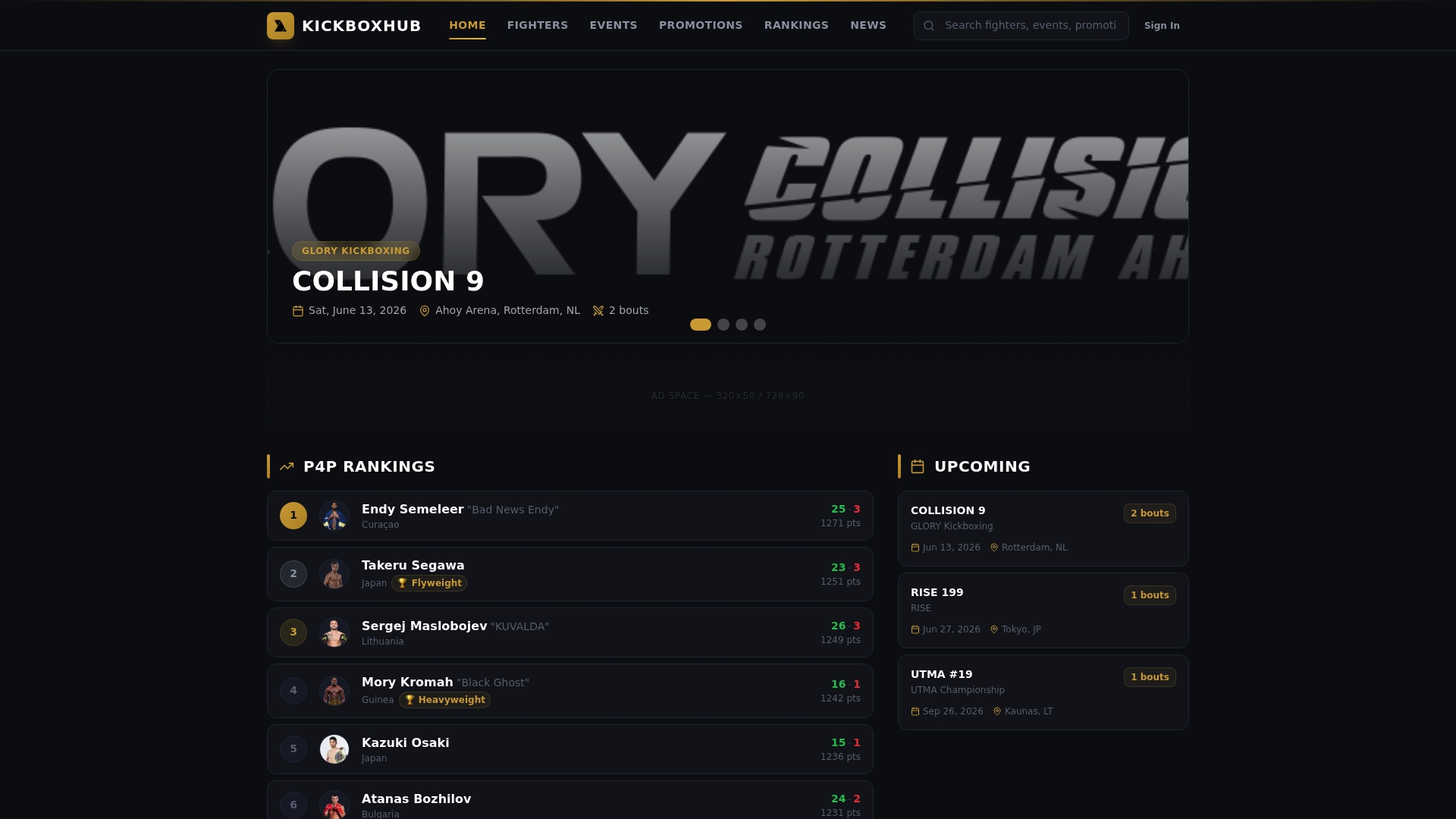
KickboxHub is the most structured kickboxing database available for analysts and enthusiasts who need fight results history without the reconstruction work. Fighter profiles like those for Ryujin Nasukawa (17-3) compile chronological fight outcomes, title lineage data, and event context in one place. The platform's promotions directory indexes major kickboxing organizations, giving you a direct path to the promotion archives that matter most for your research. Rankings, gyms, and a prediction leaderboard round out the analytical toolkit. Whether you are building a fighter database or tracking a title lineage across five years of competition, KickboxHub cuts the reconstruction time dramatically. Start your search at the fighters database and work outward from there.
FAQ
Where can I find official kickboxing fight records?
The WKO Fight-Rec system provides verified records from 2018 onward for WKO Open Championships, while WAKO's official event list indexes sanctioned competitions across its member organizations. For promotion-level bout results, ONE Championship and X-1 Events maintain detailed public archives.
What is the difference between a title lineage page and an event results page?
A title lineage page tracks championship succession over time, naming each titleholder and the event where the belt changed hands. An event results page documents the specific bout outcomes, methods, and round details for every fight on a single card.
How do I verify kickboxing fight results from unofficial sources?
Cross-reference any unofficial record against the sanctioning body database and the promotion's own event archive. If the fight does not appear in either official source, treat it as unverified and tag it accordingly in your dataset.
Why do fighter records differ across different websites?
Record discrepancies usually reflect different organizational scopes. A database covering only WKO-sanctioned bouts will show fewer fights than one that includes regional promotions. Inconsistent transliteration of fighter names also creates duplicate or missing entries across platforms.
What data fields should I record for each kickboxing fight?
A minimal reliable schema includes winner, loser, method of victory, fight date, event name, and sanctioning body. Round and time are useful additions when available, but the core six fields keep your dataset functional even when secondary details are missing.
Recommended

Comments (0)
Sign in to leave a comment.
No comments yet. Be the first!